

Lung cancer doesn’t get talked about the way breast cancer or colon cancer do. There’s less pink ribbon energy around it, fewer walks, fewer campaigns that break into mainstream news. Yet it kills more Americans every year than the next three cancers combined. That gap between impact and attention is exactly the problem World Lung Cancer Day was built to close.
If you’ve searched for when is World Lung Cancer Day, or you’re trying to understand what this observance actually does, here’s the full picture — the history behind it, what it means for people in the U.S., and how you can be part of it this year.
When Is World Lung Cancer Day?
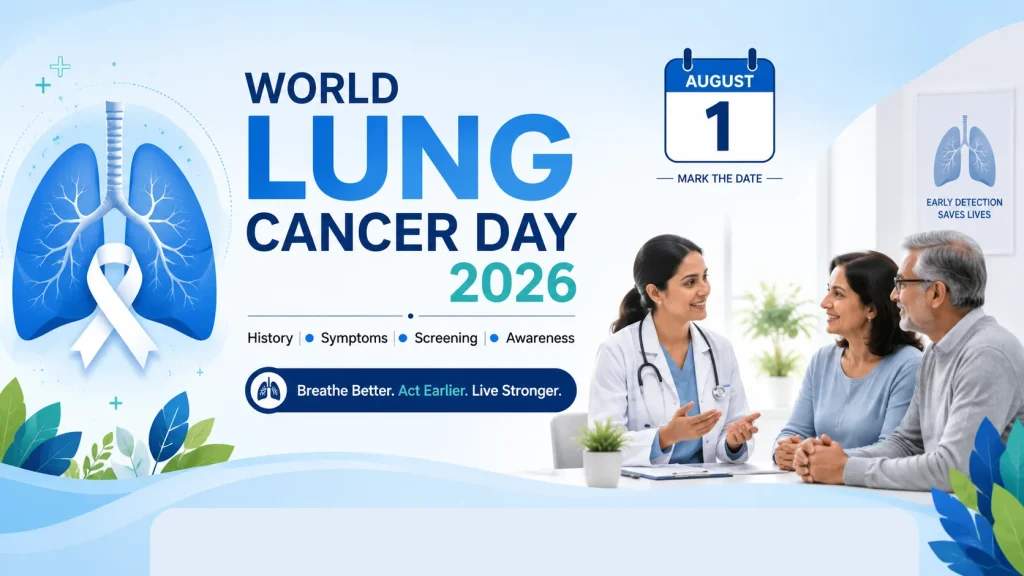
Mark your calendar for August 1. That’s the date, every single year, not shifting around like some observances that move with the calendar. World Lung Cancer Day was founded back in 2012, put together by respiratory health groups who felt lung cancer needed its own dedicated day rather than getting folded into general cancer awareness efforts.
Since then, World Lung Cancer Day August 1 has grown into something hospitals, cancer centers, patient advocacy groups, and nonprofits build entire campaigns around. Screening events, survivor panels, social media pushes, fundraising drives — it all tends to cluster around this one date, which is part of the point. A single fixed date makes it easier for organizations across the country to coordinate and for the message to actually land somewhere.
Is There a World Lung Cancer Day 2026 Theme?
Not officially, at least not as of this writing. Unlike World Cancer Day in February, which has run under a multi-year global theme, World Lung Cancer Day doesn’t always get one centralized slogan handed down from a single authority. Instead, different organizations tend to rally around their own campaign language each year — things like standing with patients currently living with the disease, or pushing harder on early screening.
That said, the through-line never really changes. Whatever the wording, the goal is the same: get people to understand their personal risk, push screening for those who qualify, and remind patients that this diagnosis isn’t the dead end it used to be. If you want the exact campaign name or hashtag being used for World Lung Cancer Day 2026 theme, your best bet is checking directly with organizations like the Lung Cancer Foundation of America closer to the date, since that messaging often isn’t finalized until late July.
Why World Lung Cancer Day Matters
Here’s a fact that surprises a lot of people: you don’t have to smoke to get lung cancer. It’s the assumption that trips up early detection more than almost anything else. Plenty of patients have never touched a cigarette in their life. Radon gas sitting quietly in a basement, years of secondhand smoke exposure, certain workplace chemicals, air pollution, family history — all of these raise risk too, and none of them get the attention smoking does.
That misconception has real consequences. People who assume lung cancer “isn’t their problem” are slower to notice symptoms and slower to raise concerns with a doctor. And lung cancer isn’t forgiving about delay — early stages often cause almost nothing noticeable, no dramatic symptom that sends you straight to the ER. By the time symptoms show up clearly, the disease has frequently already advanced.
This is why low-dose CT screening has become such a big deal. It can catch tumors while they’re still small, years before symptoms would appear on their own. Awareness campaigns exist to close the gap between what screening can do and how few eligible people actually get screened.
Symptoms Worth Paying Attention To
A persistent cough that won’t quit, or one that keeps getting worse, deserves a conversation with your doctor. So does coughing up blood, even a small amount. Chest pain that flares up when you breathe deeply, laugh, or cough is worth mentioning too, and so is shortness of breath that seems to be creeping up over weeks or months rather than appearing overnight.
Hoarseness that lingers, unexplained weight loss, fatigue that sleep doesn’t fix, and infections like bronchitis or pneumonia that keep coming back — none of these guarantee lung cancer, and most of the time they don’t mean that at all. But they’re the kind of signals patients tend to wait too long to report, and that hesitation is often what turns a treatable diagnosis into a harder one.
Who Should Be Getting Screened
Current guidelines generally point toward annual low-dose CT scans for adults with a substantial smoking history, particularly those who currently smoke or quit within roughly the past 15 years, and who fall within a certain age range. The exact eligibility criteria can shift slightly depending on updated medical guidance, so this isn’t something to self-diagnose from a blog post. Bring it up directly with your primary care provider — it’s a five-minute conversation that could genuinely change the trajectory of your health.
A Few Ways to Get Involved
You don’t need a medical degree to make this day mean something. Share something accurate on social media instead of letting outdated smoking-only myths circulate unchecked. If you know someone with a long smoking history, bring up screening — gently, but bring it up. Sit with a friend or relative going through treatment; presence matters more than people admit. And if you’re able to give, support organizations doing frontline work with patients facing cancer and other serious, life-limiting conditions. None of this needs to be dramatic — a short conversation or a phone call to check in adds up faster than people expect.
Every Conversation Can Save Lives
World Lung Cancer Day reminds us that awareness can lead to earlier diagnosis, better treatment outcomes, and greater support for those affected by the disease. By learning the facts, encouraging screening, and standing with patients and caregivers, each of us can help reduce the impact of one of America’s deadliest cancers.
Whether you share educational resources, encourage someone to schedule a screening, or support organizations providing cancer care and research, every action contributes to saving lives and building hope for the future.
Frequently Asked Questions
Can you survive stage 4 lung cancer?
Yes, and increasingly so. Stage 4 used to carry a near-uniform grim outlook, but targeted therapies and immunotherapy have shifted that picture for a meaningful number of patients. Survival still depends heavily on the specific cancer subtype, how far it has spread, and how the individual responds to treatment, so there’s no single answer that applies to everyone. What’s changed is that “stage 4” no longer automatically means what it used to.
Which lifestyle habit is strongly linked to lung cancer?
Smoking, by a wide margin. It’s still responsible for the large majority of lung cancer cases in the U.S. But it’s worth repeating: secondhand smoke exposure, radon in the home, and certain occupational exposures can raise risk substantially even for people who’ve never smoked a cigarette.
What is the theme of the World Lung Cancer Day 2026?
No single global theme has been officially confirmed as of now. Different advocacy groups typically run their own campaign messaging around the date, usually centered on patient support, screening, and awareness. Check with major lung health organizations directly as August 1 approaches for the specific language they’re using this year.
Where does lung cancer usually spread first?
Most often, it spreads first to nearby lymph nodes in the chest before moving further. From there, common destinations include the brain, bones, liver, and adrenal glands. Exactly where and how fast it spreads depends on the type of lung cancer and how advanced it already is at diagnosis.