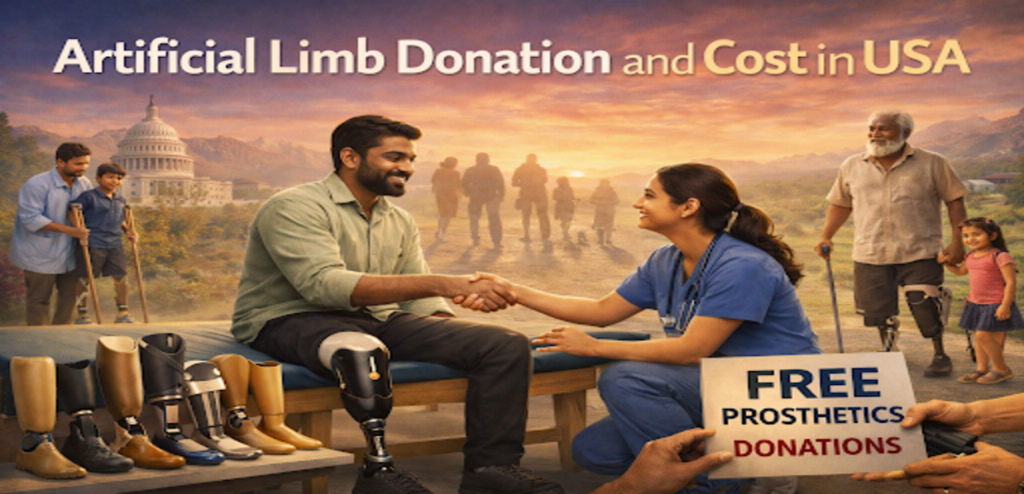


Prosthetic limbs help people regain mobility, independence, and confidence. They are life-changing devices for individuals living with limb loss or physical disabilities.
However, many Americans struggle to access these devices because of their high cost. For countless families, the financial burden can make prosthetic care difficult to afford.
This is where artificial limb donation programs make a difference. These initiatives help bridge the gap by providing essential support and access to mobility solutions.
According to the Amputee Coalition, more than 2 million people in the United States live with limb loss. As this number continues to grow, access to affordable prosthetic care becomes increasingly important.
Artificial limb donation programs ensure that financial challenges do not prevent people from living active and independent lives.
The Cost Challenge: Understanding Artificial Limb Expenses in the USA
The cost of prosthetic limbs in the USA can be overwhelming for many individuals and families.
Prices vary depending on several factors, including:
- Type of prosthetic limb
- Technology and features
- Level of customization
- Materials used
- Ongoing maintenance needs
A basic artificial limb may cost between $5,000 and $10,000. More advanced options, such as myoelectric or robotic prosthetics, can exceed $50,000 and may reach $100,000 in highly specialized cases.
These costs reflect the sophisticated engineering, advanced materials, and precision fitting required for modern prosthetic devices.
Maintenance expenses can also add hundreds of dollars each year.
Insurance coverage often creates additional challenges. While some plans cover a portion of prosthetic costs, others impose strict limits or exclude coverage altogether.
As a result, many individuals face significant out-of-pocket expenses and must seek alternative sources of support.
Free Artificial Limb Programs: A Source of Hope
Several organizations across the United States help make prosthetic care more accessible through free artificial limb programs and financial assistance initiatives.
Limbs for Life Foundation
The Limbs for Life Foundation provides free prosthetic limbs to uninsured and underinsured individuals.
Its mission is simple: eliminate cost as a barrier to mobility and independence.
Amputee Coalition
The Amputee Coalition connects individuals with valuable resources, donation programs, and peer support networks.
Beyond financial assistance, the organization helps build a strong and supportive community for people living with limb loss.
Department of Veterans Affairs (VA)
For military veterans, the Department of Veterans Affairs (VA) provides comprehensive prosthetic care and access to advanced artificial limb technology.
These services reflect a long-standing commitment to supporting veterans and improving their quality of life.
Collectively, these programs serve people of all ages, including:
- Children with limb differences
- Adults recovering from accidents
- Veterans with service-related injuries
- Older adults facing mobility challenges
How to Support Artificial Limb Donation Programs
Supporting artificial limb donation initiatives is a powerful way to improve lives and help individuals regain independence.
Donate Used Prosthetic Limbs
Many organizations accept used prosthetic devices that can be refurbished and provided to individuals in need.
This helps reduce waste while extending the life of valuable mobility equipment.
Make a Financial Contribution
Financial donations help nonprofit organizations fund:
- Prosthetic manufacturing
- Custom fitting services
- Medical evaluations
- Rehabilitation support
- Follow-up care
Volunteer Your Time
Volunteers play an important role in fundraising, awareness campaigns, and community outreach efforts.
Raise Awareness
You can also support the cause by sharing information through:
- Social media campaigns
- Community events
- Workplace initiatives
- Educational programs
Every contribution, no matter the size, helps create a more inclusive future for people living with limb loss.
Final Thoughts: Transforming Lives Through Generosity
Artificial limb donation is more than an act of charity. It is an investment in mobility, independence, and hope.
By supporting prosthetic programs, donors help individuals regain confidence and participate more fully in everyday life.
Narayan Sewa Sansthan US has been serving communities as an NGO in USA for more than a decade. Through its ongoing humanitarian efforts, the organization continues to support individuals who need mobility assistance and rehabilitation services.
Whether you are seeking financial assistance or looking for a meaningful way to give back, there are many opportunities to make a difference.
As we move forward, let us work together to ensure that no one is denied mobility because of financial limitations.
Explore these opportunities today and become part of a growing movement dedicated to changing lives across the United States.
FAQs
1. How much does an artificial limb cost?
In the United States, a basic artificial limb typically costs between $5,000 and $10,000. Advanced prosthetic limbs with robotic or microprocessor-controlled technology can cost between $50,000 and $100,000, depending on the user’s needs and level of customization.
2. How long do artificial limbs last?
Most prosthetic limbs last between 3 and 5 years before requiring replacement. Certain components, such as liners, sleeves, and sockets, may need replacement every 6 to 12 months due to regular wear and tear.
3. What are the four main types of prosthetics?
The four primary categories are:
- Transtibial (below-knee)
- Transfemoral (above-knee)
- Transradial (below-elbow)
- Transhumeral (above-elbow)
Each type is designed to restore specific functions and improve mobility.
4. Is there a charity for prosthetic legs?
Yes. Narayan Seva Sansthan USA is a registered 501(c)(3) nonprofit organization that supports individuals in need of artificial limbs. Donations help fund custom prosthetic devices, corrective surgeries, rehabilitation services, and therapy programs that enable beneficiaries to regain mobility and independence.