

Introduction
Millions of people globally experience rare disorders that affect mobility and restrict their capacity to perform daily tasks. Many of them can be treated by specialized medical procedures, but the issue of quality healthcare accessibility is one of the biggest problems faced by underprivileged communities.
Countries such as India are bridging this gap through humanitarian healthcare initiatives. Thousands of lives are being changed through charitable organizations. Corrective surgeries in India are one of the most effective interventions that help to give back mobility to individuals with congenital disabilities and physical deformities.
“Compassion can transform pain into possibility.”
Understanding Rare Diseases and the Need for Corrective Surgeries
Rare diseases and congenital disabilities affect bones and muscles, along with joints, which may lead to mobility problems in the long term. Although most of these conditions may be addressed using operations and rehabilitation, the challenge of accessing treatment is a significant barrier to economically weaker groups.
1. Congenital Physical Deformities
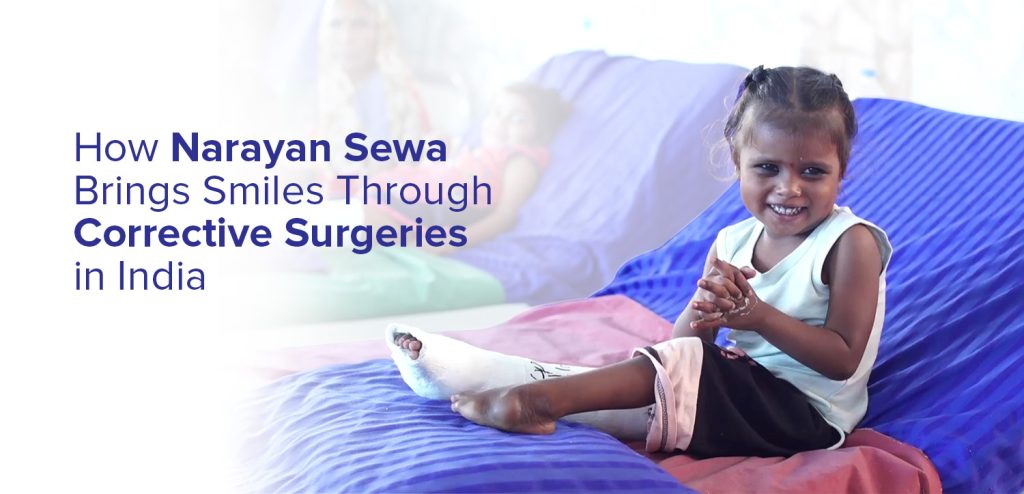
Some individuals are born with orthopedic conditions such as clubfoot or limb defects. The disorders can cause movement inhibition and postural changes. Corrective surgeries help in making sure that bones and joints are set back on the right path, to help patients regain normal movement and physical capabilities.
2. Inaccessibility to Specialized Healthcare
Low-income communities do not always find orthopedic surgeries affordable. Most families are unable to pay for medical tests and surgical operations. This means that disability goes untreated for a number of years.
3. Social and Psychological Effect
Physical disabilities can lead to social isolation and low self-confidence. Without treatment, people might not be able to get education, employment, or even community life.
4. Significance of Early Medical Intervention
Corrective Surgeries should be performed early to prevent complications and improve the long-term outcomes. Early treatment not only improves mobility but also makes the lives of people better and makes them more participatory in society.
“When healing begins, hope follows.”
How Compassionate Healthcare Initiatives Transform Lives
Humanitarian medical programs have been established in India and all over to treat and rehabilitate underprivileged patients with disabilities. These programs are aimed at providing them with functionality and enhancing the quality of life.
1. Free Corrective Surgeries for the Underprivileged
Thousands of corrective surgeries are performed on individuals with congenital deformities and mobility issues by specialized hospitals and medical personnel. These procedures are provided free of charge to patients who cannot afford treatment.
2. Artificial Limb Distribution
The people who lost limbs after illnesses or accidents are supplied with Artificial limbs and physical support, such as the programs of Narayan Sewa Sansthan USA. These programs can assist in restoring independence and resuming the normal lives of the beneficiaries.
3. Rehabilitation and Physiotherapy Support
Post-operative rehabilitation is a highly significant aspect of recovery. Physiotherapy programs help the patient to be stronger, more mobile, and adapt according to their recovered physical capabilities.
4. Medical Camps and Community Outreach
Medical outreach programs are used to find patients in rural and underserved locations who need treatment. With the help of these camps, individuals who live miles away from hospitals are able to receive healthcare services.
5. Skill Development and Self-Reliance
In addition to medical care, there are vocational training programs that offer skills training, computer training, and other trades. Such programs assist the diversely challenged communities to be economically self-reliant.
“A restored step can restore an entire future.”
The Power of Corrective Surgeries Donation
The cost of providing corrective surgeries in India and all over the world is very high. Advanced surgical tools, qualified medical experts, and after-treatment are just a few of the steps that also come with a tremendous price that many disadvantaged families simply have no access to.
That is where Corrective Surgeries Donation becomes a very effective tool.
The donors located in India or outside contribute significantly to the humanitarian medical services, which provide Corrective Surgeries in India at no cost. Such donations can be used to fund surgeries, hospital care, diagnostic tests, rehabilitation therapy, and mobility aids for patients who would be otherwise untreated.
The effect of charitable contributions is felt more in the United States, where philanthropy contributes a significant part towards humanitarian causes across the globe. In fact, Americans donated approximately $592.5 billion to charitable organizations in 2024, marking one of the highest levels of charitable giving ever recorded.
This kind act demonstrates that the United States people are taking the initiative to provide help in other parts of the world. Access to surgery may be life-changing to a patient who has spent years struggling to walk or stand. It may involve going back to school, finding jobs, and being an active member of society.
Even in most instances, one surgery can change the future of a whole family.
“Your generosity today can help someone take their first step tomorrow.”
Be the Reason Someone Walks Again
There are thousands of people in India who are in need of life-saving medical care. Through generous donors, more patients will be able to get the surgery and rehabilitation they require.
Your donation can assist in providing:
- Free Corrective Surgeries
- Rehabilitation and hospital treatment
- Artificial limbs and mobility aids
- Health services for poor patients
Donors in the United States contribute to programs sponsored by Narayan Sewa Sansthan USA, which supports the Corrective Surgeries in India and the rehabilitation of patients who are unable to cover the cost of medical care.
A small Corrective Surgeries Donation can make an effective change and bring hope to families.
Conclusion
Congenital disabilities as well as rare diseases pose life-long challenges to individuals, particularly those who live in poverty and cannot afford proper medical care. With caring healthcare programs, we can turn these obstacles into recovery and hope.
Narayan Sewa Sansthan, though its humanitarian effort has been offering free Corrective Surgeries in India, artificial limbs, and rehabilitation services to the needy people for decades. Such life-changing programs assist in restoring mobility, confidence, and independence in thousands of patients each year.
Corrective Surgeries Donation initiatives allow donors to join forces with a strong movement that makes a difference and brings healing, dignity, and opportunity to those who require it the most.
Since in some cases, the best present that we can offer to someone is the opportunity to stand again. So, Donate Now!
FAQs
- What are corrective surgeries?
Corrective surgeries are surgical operations that are used to fix physical disabilities or congenital flaws in order to enhance mobility and physical ability.
- Who benefits from corrective surgeries in India?
The surgeries are beneficial to the underprivileged people with congenital disabilities, corrective surgeries-related disorders, or mobility disorders.
- Can donors from the USA support corrective surgeries in India?
Yes. Supporters from the USA can contribute via registered nonprofit organizations, which finance free surgeries and rehabilitation services for Indian patients.
- How do corrective surgery donations help?
Donations are used to fund the surgeries, hospital treatment, rehabilitation treatment, and mobility assistance to the patients who are not able to afford medical treatment.